
Request your free kit!
For all your pool and spa needs
For questions or more information, email us at NRH@bncpools.com or find the location nearest you.
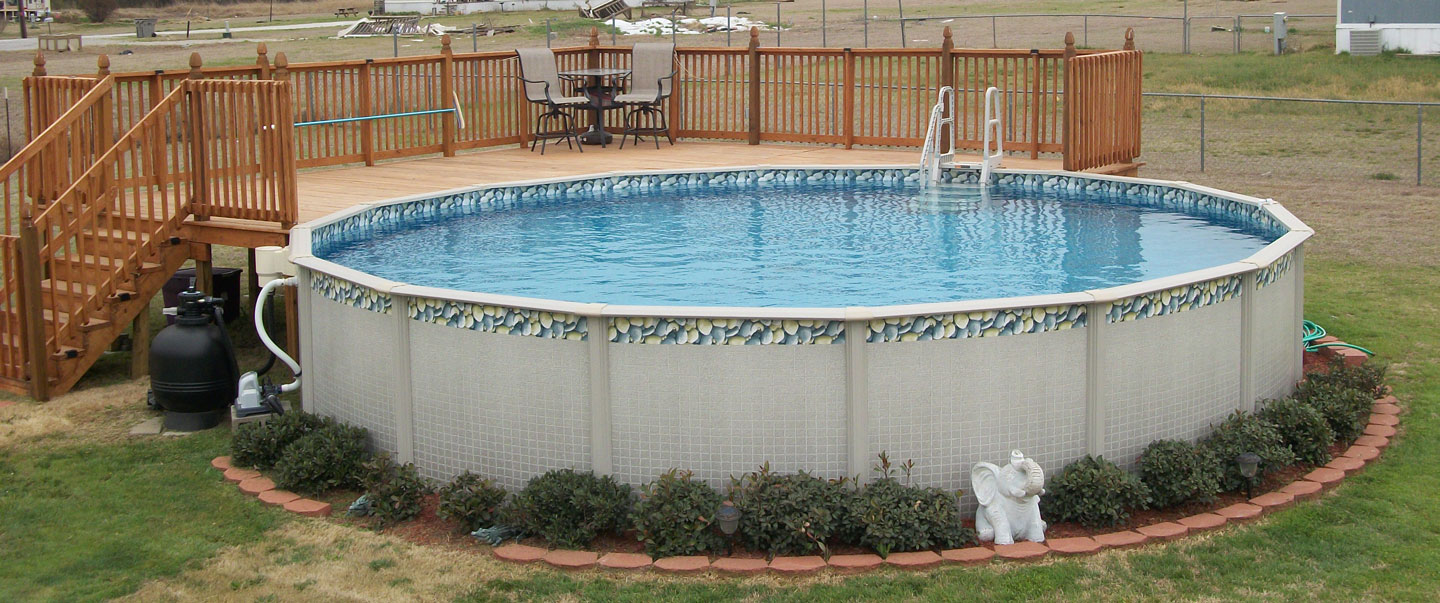
Above ground pools come in many different sizes, are made out of different materials, and everyone seems to have a different preference on what should go in your backyard, so what should you buy? At Bonnie and Clyde’s we do not believe you should buy the most expensive pool you can. We believe you should buy the right pool for your needs. Here’s what to look for:
Pool walls usually come in 48, 52 or 54 inches high. When above ground pools first started being manufactured almost all pools used 48” walls. You typically fill a pool 4 inches from the top and have sand on the bottom so those pools actually held 3’6” of water. Many people wished they were deeper so the manufacturers started making 52 inch tall pools so that they would hold nearly 4 feet of water at 3’ 10”. Now the most popular pools are 54” tall and they can actually hold 4’ of water. Two inches may not seem like a big difference but you will certainly notice it while you are swimming.
The walls are the most important component of the pool because the wall is what supports the weight and pressure of the water. Pool walls are made from either galvanized steel, aluminum, or a new revolutionary composite resin. They all provide plenty of strength but each has it’s own positive qualities. The steel walls are the least expensive and are available with standard enamel painted galvanized steel or for added protection, the manufacture resin coats some of these walls to further seal out moisture and corrosive materials. Pools with these walls will have a lower initial cost, but are the most vulnerable to rust and corrosion. The aluminum walls are a great alternative, at a little higher cost, because aluminum will not rust so you are getting a pool wall that will last longer in normal situations. The newest wall material, the composite resin, does have the highest initial cost but is guaranteed never to rust or corrode. This assures you that you will have the longest lasting pool wall available!
Many steel wall pools will also come with an aluminum service panel to provide rust proofing at the point where your plumbing comes through the wall of the pool. This can be important, because a leak here can cause rust on a plain steel wall pool. This does make the pool more expensive, but also help to assure the longevity of the pool overall.
The top ledges of your pool compose the exposed top ring of the pool. They are important because they are the part you see the most while you are in the pool, with the exception of the liner. They are also the only part of the pool horizontally exposed to the sun and weather. Generally, they are made from either galvanized steel, resin coated steel, or resin. Resin is considered the better material because it simply can never rust and stays cooler to the touch. Steel ledges are a great alternative because they are strong and economical. They have many layers of protection to prevent rust and corrosion.
The ledges of pools also come in a variety of widths that are usually somewhere between 1 inch and 12 inches. At Bonnie and Clyde’s we feel that anything less than 6 inches is not going to last and anything over 9 inches isn’t worth the extra money. We have 6”, 7”, 8″ and 9 inch ledges to choose from.
The uprights are the vertical braces on the side of the pool. These braces are used to support the top ledge of the pool. These braces are typically made from galvanized steel or resin coated galvanized steel. Our newest pool, the Pandora, actually uses extremely strong full resin uprights. As the Top ledges get wider, these uprights must get bigger as well to support them. As with the pool walls and ledges, the resin coating gives the steel superior corrosion resistance, but once again, full resin cannot rust or corrode and will give you the longest lasting pool.
The ledge cover is used to cover the joints of the top ledges. They cover all the screws and plates used to assemble the pools and provide protection from any sharp edges. These are available in steel or resin, however all the pools at Bonnie and Clyde’s come with resin covers for the greatest protection for kids against sharp edges.
The stabilizer rails are used at the top of the pool to make the wall rigid. They also hold the liner onto the top of the pool by squeezing the coping strips on overlap liners or the v-bead of the unibead liners. These rails come in galvanized steel, aluminum, or full Resin. Most of the pools from Bonnie and Clyde’s use metal interlocking rails for a complete stabilizer ring all the way around the pool. The Pandora pool uses resin rails that lock into the upright to help unify the resin structure.
The foot cover is a decorative piece that makes the pool more aesthetically pleasing. It provides a finishing touch at the bottom of the upright on more expensive pools.
Round pools have equal water pressure all around the pool. That is why they do not require any additional braces to support them. Oval pools are quite different. On an oval pool, the narrow sides of the pool have more pressure than the curved ends. Therefore, these pools require additional bracing on the sides to maintain their shape. These braces are available in two types. The most common and easiest to install is the Buttress oval. (sometimes called K-brace) This system uses braces that extend approximately 33” from the base of the wall and have a second brace that reaches to about the middle of the upright. It is important to consider these braces when choosing the position of the pool in your yard so that you can accommodate them. The other type of bracing system is called Braceless, compact, or Yardmore. These systems use pressure plates under the pool and heavy gauge steel beams to support the lateral pressure of the pool. Since the plates are under the pool, these braces only extend approximately 10-12” away from the base of the pool. Because of this, they do not extend past the 15-18” landscape perimeter around the pool, saving space in the yard and making it easier to mow around.


Pools come in both round and oval shapes, in a variety of sizes in each shape. Round pools will give you much more swim area for the dollar. Oval pools require extra bracing, which makes them a little more expensive and a little harder to install. Keep in mind that most cities have regulations on how close to your property line and to your house you can build a pool. They will also direct you on how close to a power line you can build. Generally, you want to be five feet from a property line or permanent structure, five feet from an underground power line and ten feet from an overhead power line. Since pool prices don’t increase very much per size, be sure to go as big as you are comfortable with. As your friends and neighbors start coming over to enjoy your pool, we hear all the time that people wish they had gotten a bigger pool! We very rarely hear people say that they wished that they had gotten a smaller one.